
Clinical EvidencePedal Study
Multi-center, core-lab adjudicated, retrospective study

Serration angioplasty of the inframalleolar vasculature in patients with CLTI had high rates of technical success with a low incidence of vessel injury.
Methods: Patient with SA of the pedal vasculature for CLTI from January 01, 2021 to March 31, 2023 were included in this multicenter retrospective study. Pedal vessels were defined as any inframalleolar vessel distal to the talocrural joint. Patient demographics, anatomic and technical details, acute procedural outcomes, and outcomes at the most recent follow-up were collected for analysis.
Results: Of the identified 45 patients managed with pedal SA, median pre-intervention Rutherford classification was 5, and 91.9% of patients had concomitant below-the-knee tibial artery intervention. The most commonly treated artery was the dorsalis pedis (59.2%), with a median diameter SA of 2.5 mm. Residual stenosis was <50% in 93.3% of cases and <30% in 82.2%. Freedom from vessel injury was 93.3%. Six-month freedom from major amputation was 93.3%, freedom from pedal CD-TLR was 93.3%, and freedom from MALE was 80.0%. At a median follow-up of 163 days, 48.7% of patients had complete wound healing, with the total frequency of either healed or improving wounds of 79.5%.
Read the published article here.
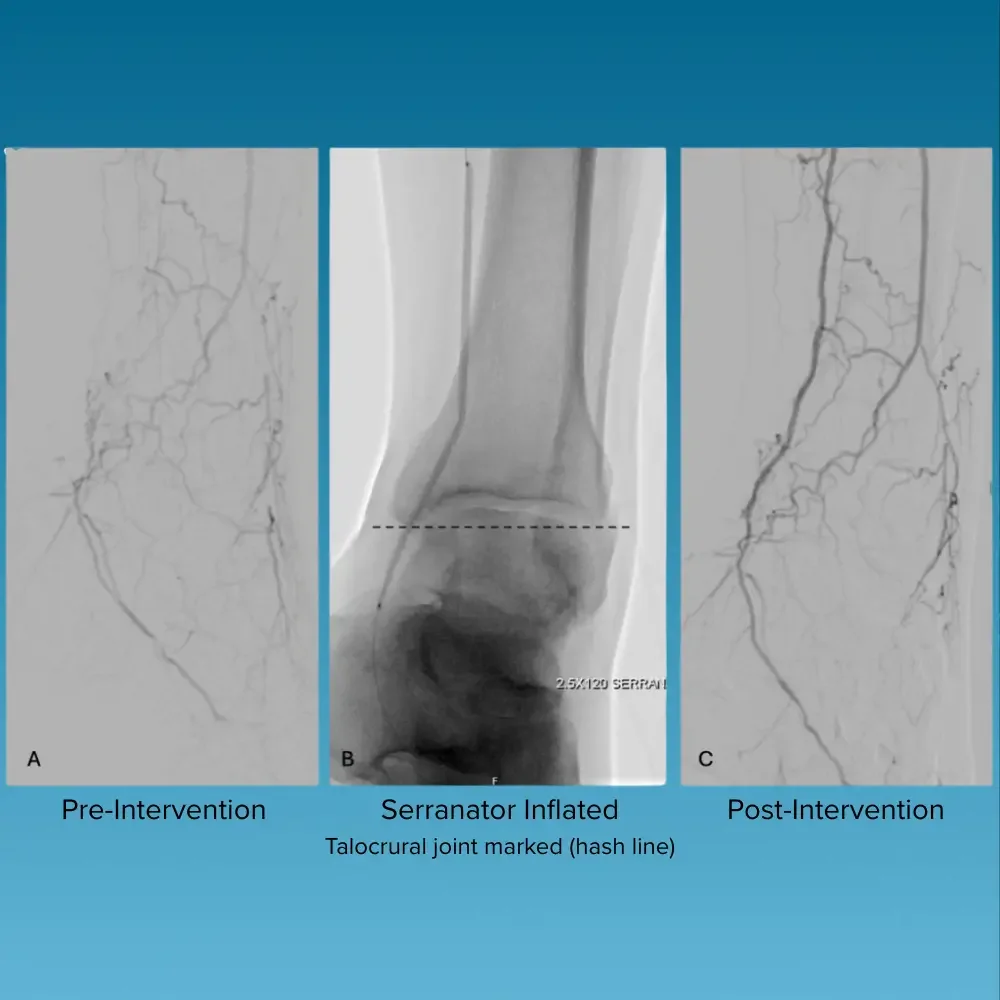
Example of inframalleolar serration angioplasty
References:
Gifford E, Siah M, Lichtenberg M, et al. Technical Success and Clinical Outcomes of Pedal Serration Angioplasty for Chronic Limb-Threatening Ischemia. Journal of Endovascular Therapy. 2026;0(0). doi:10.1177/15266028261440736