

patientsWhat is Serration Remodeling Therapy?

Here’s a simple way to think about how the Serranator works:
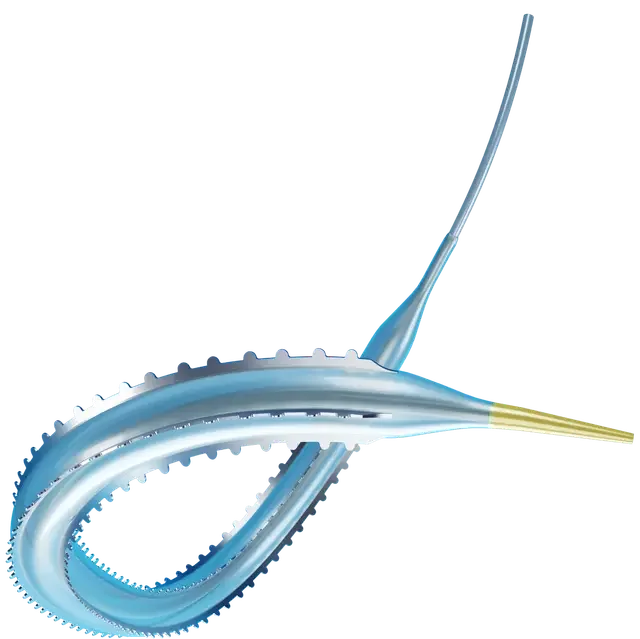
Imagine trying to open a sealed envelope. You could press a flat hand against it and push, that’s like a standard balloon, applying pressure across the whole surface. Or you could run a letter opener along the seam, applying focused force in a controlled line. The letter opener takes less effort and opens the envelope more cleanly. That’s the principle behind SRT.
The Serranator has tiny stainless-steel strips along the balloon surface. When the balloon is inflated, these strips concentrate force into precise points against the artery wall, creating a controlled opening at lower pressure, without the unpredictable stretching of a standard balloon.
WHY MIGHT MY DOCTOR CHOOSE THE SERRANATOR?
Your doctor may consider the Serranator if:

Your artery blockage is in your legs from the groin all the way down to the foot
You have a dialysis fistula that has narrowed and needs to be reopened
Your blockage involves heavy calcium buildup (calcification), which can make standard balloons less effective
Your doctor wants to avoid placing a stent, if possible, especially in arteries that bend or flex with movement
You have severe PAD (CLTI) and need treatment in very small foot vessels

IS THE SERRANATOR RIGHT FOR ME?
Only your doctor can determine the right treatment for your specific situation. The Serranator is FDA-cleared for treating blockages in the leg arteries from the iliac (near the hip) down to the pedal (foot) vessels, as well as for dialysis access fistulas.
If you’d like to explore whether SRT might be an option for you, the best first step is to talk to your vascular specialist.